
Revision Rhinoplasty
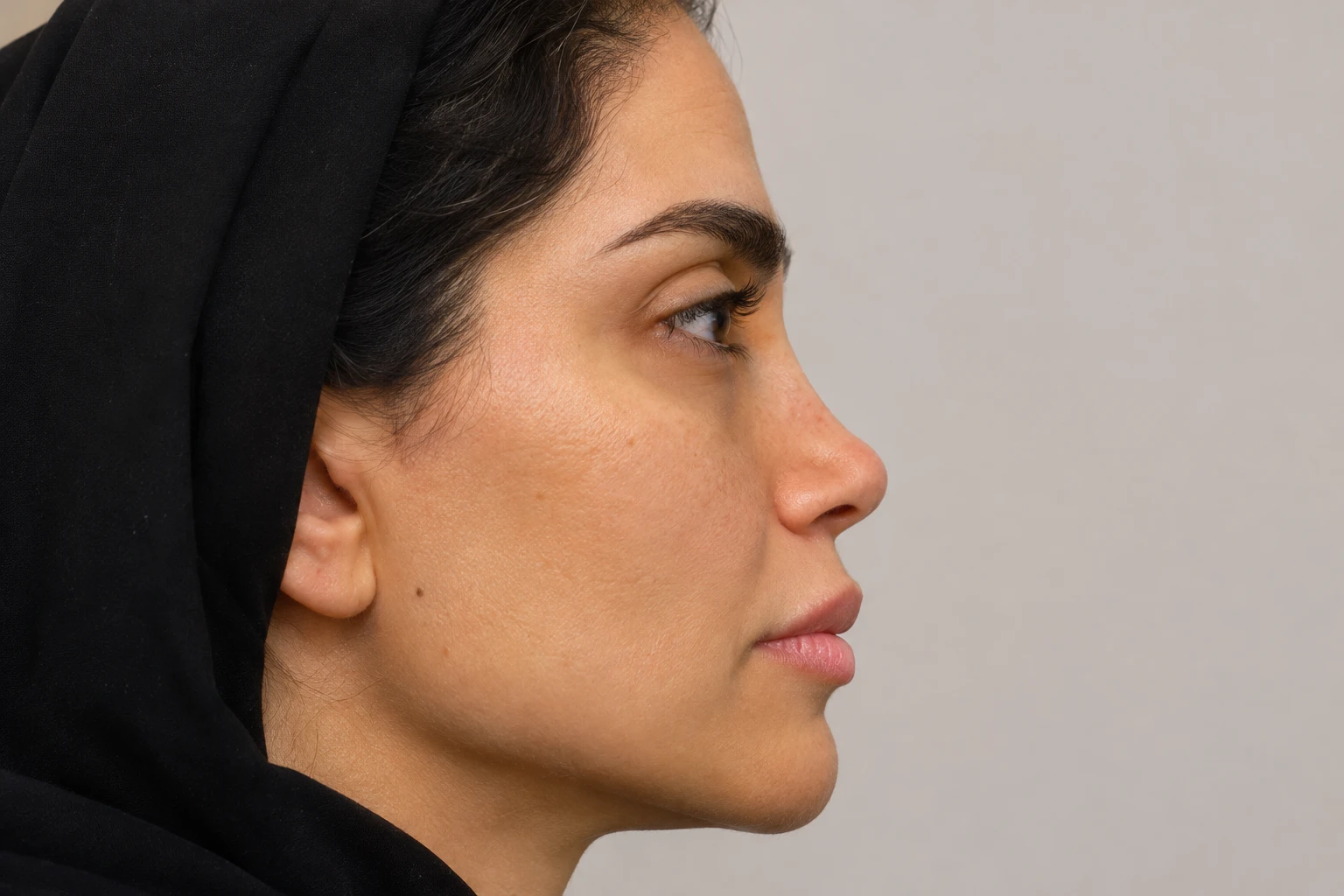
Revision rhinoplasty corrects the results of earlier nasal surgery or the effects of fractures and injuries, and addresses concerns with both shape and breathing. Dr. Amani Obeid performs revision rhinoplasty in Riyadh. Each plan is made after your consultation, based on what has changed in the structure of your nose and what you would like to improve.
- Anesthesia
- General
- Length of surgery
- Three to five hours
- Timing
- About a year after earlier surgery
- Splint
- About one week
- Final shape
- A year to a year and a half
What revision rhinoplasty can address
Every case is different, because what needs correcting depends on what was done the first time.
- Results of earlier surgery
- A remaining hump, an uneven tip, or asymmetry after a previous rhinoplasty.
- Breathing
- Blockage or narrowing that appeared after earlier surgery, treated by opening and supporting the airway.
- Fractures and injuries
- Straightening a nose that is crooked or misshapen after an injury.
- Nasal bridge
- Rebuilding a bridge that is low or was reduced too much.
- Tip and nostrils
- Supporting a weak or pinched tip, and correcting retracted nostrils.
Who is a candidate
Revision rhinoplasty suits people in good general health who have a specific concern about the shape of their nose or their breathing after earlier surgery or an injury.
It is usual to wait about a year after the earlier operation, so that swelling has settled, the tissues are stable, and it is clear what truly needs correcting.
Revision surgery is more demanding than a first operation, and not every goal can be reached. During your consultation, Dr. Obeid explains what can be improved and what is difficult to change.
How it differs from a first operation
Tissue that has been operated on
Earlier surgery leaves scar tissue under the skin and changes the shape of the cartilage, so the work takes more precision and more time.
The need for cartilage
The cartilage left in the nose may not be enough to rebuild it. In that case cartilage is taken from the septum, the ear, or a rib.
Planning starts with your surgical history
Dr. Obeid examines the nose inside and out, assesses the airway, and reviews the reports and photographs from your earlier surgery when they are available. Her specialty training in ear, nose, and throat surgery makes breathing part of every plan.
The day of surgery
Revision rhinoplasty is performed in the hospital under general anesthesia. It usually takes longer than a first operation: three to five hours, depending on what your case requires.
In most cases the open approach is used. At the end of surgery an external splint is placed on the nose, and most patients go home the same day or after one night.
Recovery
Recovery is similar to a first rhinoplasty, but swelling takes longer to settle.
Week one
Swelling, bruising around the eyes, and a blocked nose. The splint is removed after about a week.
Week two
Bruising fades, and most patients return to work and light daily activities.
Four to six weeks
A gradual return to exercise, following Dr. Obeid’s instructions.
Three to six months
Most of the swelling has settled and the overall shape of the nose is clear.
A year to a year and a half
The final shape settles. It can take longer with thicker skin.
Risks and limitations
Revision rhinoplasty carries the same risks as a first operation: bleeding, infection, difficulty breathing, asymmetry, temporary numbness of the skin of the nose, and dissatisfaction with the shape. If cartilage is taken from the ear or a rib, that site has its own risks.
The chance of needing a further adjustment is higher than after a first operation. Dr. Obeid explains these possibilities clearly during your consultation, before you decide.
Your surgeon
Revision rhinoplasty is performed by Dr. Amani Obeid, a consultant facial plastic and reconstructive surgeon in Riyadh. She holds the International Board Certification in Facial Plastic and Reconstructive Surgery (IBCFPRS), completed two fellowships in the United States, and limits her practice to surgery of the face and neck.
Common questions about revision rhinoplasty
How long should I wait after my earlier surgery?
It is usual to wait about a year, until swelling has settled and the tissues are stable. The timing can differ in specific cases, which Dr. Obeid decides after examining you.
Where does the cartilage come from?
From the septum if enough remains, otherwise from the ear or a rib. The source depends on how much is needed and how much support the nose requires.
Can shape and breathing be corrected in the same operation?
Yes. In most cases the airway and the shape of the nose are treated together in one operation.
Do I need the reports from my earlier surgery?
Earlier reports and photographs help with planning when they are available, but they are not required. The examination at your consultation is what matters most.
Is revision rhinoplasty harder than a first operation?
Yes, because there is scar tissue and less cartilage to work with. Surgery takes longer, and swelling needs more time to settle.
When will I see the final result?
The overall shape is clear within three to six months, and the final shape settles over a year to a year and a half.
The plan starts with a conversation
Dr. Obeid sees patients at two locations in Riyadh. To book a consultation or ask a question, contact your preferred clinic on WhatsApp.
Clinic hours
- Tuesday and Wednesday
- 4 to 8 pm
Al Safwa Majesty Hospital
Abdulrahman bin Ali Al Alsheikh Street, Riyadh